State of: Plant-Based Proteins
In recent years, the sources of protein in foods have become a central topic, and this has been driven by two global emergency situations: the rise in world population and the growing pressure on natural resources. With the current population of 7.5 billion people, set to reach almost 10 billion by 2050, identifying sustainable nutritional solutions is a strategic priority both for governments and for multinationals in the agrifood segment. This has led to the emergence of plant-based proteins as a viable solution, both for environmental reasons and for their contribution to new approaches to health.
The trend towards a higher consumption of plant-based proteins is nothing new, however: it was initially fuelled by dietary lifestyles such as ‘flexitarianism’ and by products that imitate meat and dairy products. Today, however, plant-based proteins not only offer an alternative to animal products, but are strategic nutrients for well-being at every stage of life. New models of “integrated health” are emerging, in which proteins and fibre work in synergy and the focus is no longer on the musculoskeletal system alone, but is also shifting to gut health and systemic well-being.
Consumers’ Needs When Choosing Plant-Based Products
At the same time, there is a significant change in consumer choices. The appeal of natural products has become an essential driver in purchasing decisions. According to Innova Market Insights, consumers indicate this natural appeal as the second most important benefit of plant-based products, immediately after health and ahead of environmental benefits. There is an increasing desire for less processed foods, with ingredients that are familiar and, preferably, derived from whole plants.
There is a drop, on the other hand, in interest for meat and fish substitutes, with more and more consumers preferring vegetable products that maintain their identity. In 2023, sales in dollars within the US market for plant-based meat and fish alternatives dropped by 12% compared to 2022, and by 13% compared to 2021, according to the annual survey conducted by the Good Food Institute.
According to Innova Market, this is confirmed by a gap of 14 percentage points between those who believe that plant-based products should substitute food from animals and those who would prefer them to represent independent categories, shifting the focus from “substituting” plant-based ingredients to “highlighting” their intrinsic value as such.
What New Product Launches Reveal About the Segment
Product launches in recent years reveal a radically changing market. According to Mintel GNDP, in the baby food segment, the share of new products with plant-based claims rose from 1% to 4% (2021-2024). As for spreadable products, after an initial rise from 38% to 43%, the share now dropped to 39% over the same period.
The high-protein, plant-based yoghurt category has seen a much sharper rise, accounting for as much as 26% of the most recent launches. In the bakery and snack segment, plant-based claims are on the rise: growth is constant but not yet dominating. Among recent innovations, we have food preparations such as plant-based, gluten-free pancake mixes with a high protein content, created especially for consumers who pay attention to nutritional value and food intolerances.
The Plant-Based Protein Landscape
Green-pea protein is still the most widely used in plant-based and vegan products, followed by soya and wheat protein, while new protein sources promising even better results in terms of taste, allergy-friendliness, and functional benefits, are also gaining ground.
- Fava bean protein: appreciated for its versatility, it is suitable both for meat substitutes and for enriching products. Possible allergic reactions in regions where favism is prevalent must be taken into account.
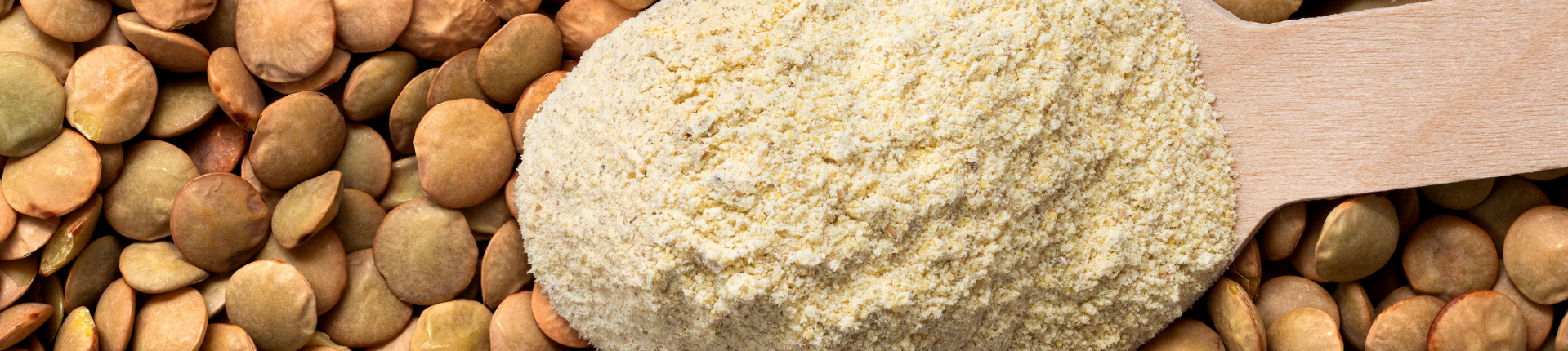
- Lentil protein: its sensory profile makes it suitable for producing dairy-free cream substitutes.
- Sunflower protein: only introduced recently, it offers several functional properties, in particular its emulsifying capacity and its versatility in different applications.
- New emerging protein sources: such as linseed, oats, hemp, rapeseed, and other still-niche ingredients.
The European Innovation Investment Agenda (2026-2035) includes investments that focus specifically on the development of new strategic supply chains. This includes crops such as sunflower and oat, and aims to promote their use in the plant-based segment and to promote greater European protein self-sufficiency.
The introduction of new plant-based proteins also comes with significant technological challenges, however: numerous raw materials have a low solubility, are difficult to modify in terms of texture, or have intrinsic undesirable tastes, which require specific processes to guarantee products that are tasty, enjoyable, and beneficial from a nutritional viewpoint.
According to the analyses conducted by Foodhub, to overcome such barriers the segment is turning to advanced technology, such as:
- enzymatic hydrolysis to optimise both solubility and digestibility;
- fermentation, which is becoming increasingly important for adjusting flavour and functional properties;
- cutting-edge technologies, such as cold plasma, with the potential to improve stability and sensory characteristics
With advances in technology on the horizon and industrial-scale expansion, the plant-based market could make a significant step forward, and thus more effectively meet consumer expectations in terms of taste, texture, and affordability. This makes it crucial to develop solutions that combine nutritional and environmental benefits with improved taste and texture, and competitive prices. This development represents a real opportunity to accelerate the adoption of plant-based foods, making them well-established as part of a more sustainable and innovative food system.
SHARE


